 Order
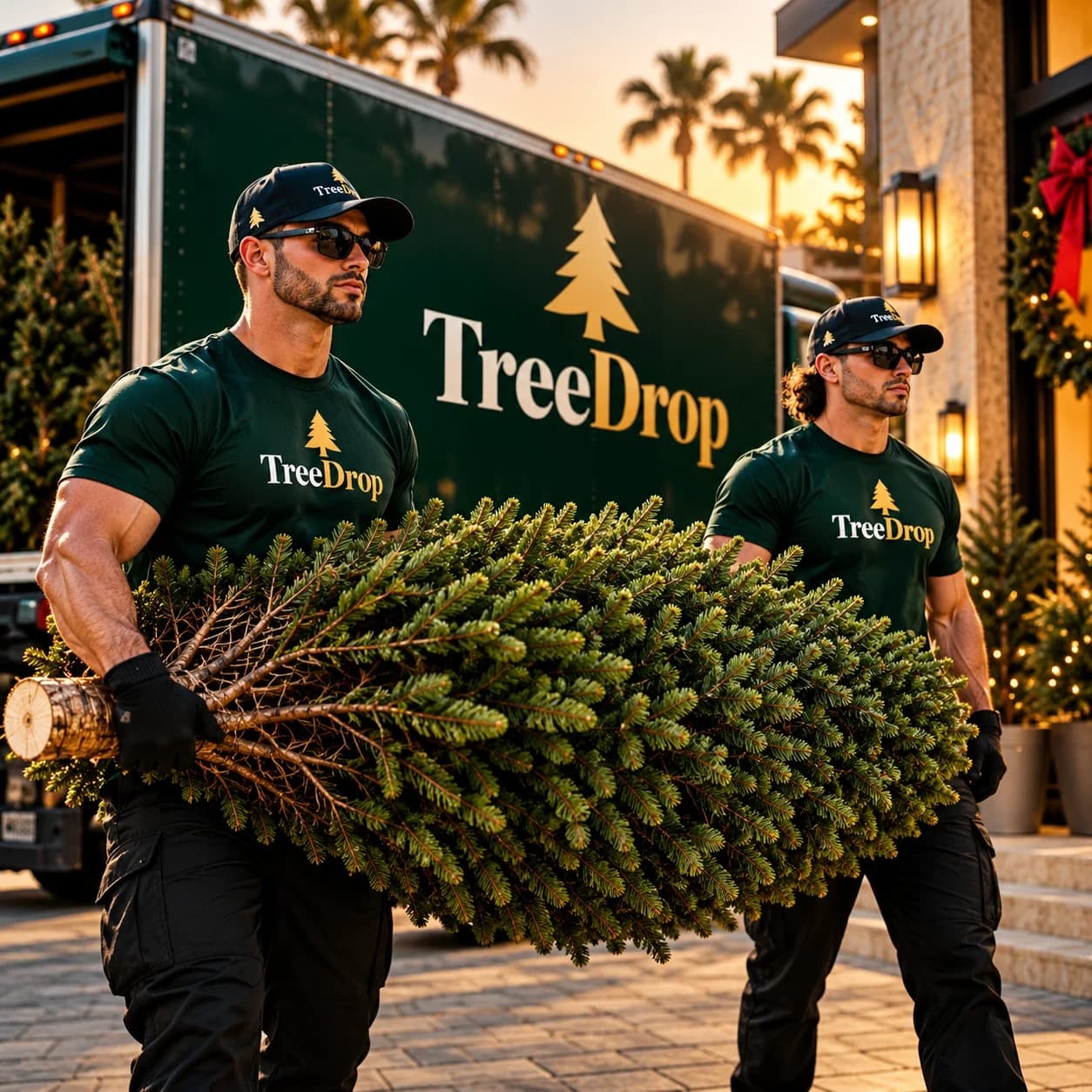

A real Christmas tree in Orange County has a different December than one back east. Afternoons here can be warm and sunny, the air can get very dry, and Santa Ana winds are most common in December. TreeDrop handles Christmas tree delivery, setup and January pickup, but the watering in between is up to you.
Keeping a tree fresh mostly comes down to one habit: never let the stand run dry. Here is what that takes in our climate, plus the fire safety basics.
Why do Christmas trees dry out faster in Southern California?
Warm, dry air pulls water out of a cut tree faster, and a Southern California December can bring plenty of both. The National Weather Service in San Diego, which forecasts for Orange County, describes Santa Ana winds as strong, dry offshore winds that are most common in December. It notes that most of the time, a Santa Ana event brings clear skies and warm weather.
Your living room feels that too. Penn State Extension says lower room temperatures and higher humidity help reduce moisture loss, and the National Christmas Tree Association (NCTA) says a cooler room means the tree uses less water each day. Flip that around, and a warm, dry Santa Ana week means a thirstier tree.
How much water does a Christmas tree drink?
More than most people expect: the NCTA's tree care FAQ says a tree can use up to one quart of water a day for each inch of trunk diameter. That means a tree with a 4 inch trunk can drink up to a gallon a day. Penn State Extension adds that Fraser fir can take up even more at first.
Check the stand every morning and every evening for the first week, then at least once a day after that. The U.S. Fire Administration keeps it simple: water your Christmas tree every day.
Why can't the stand run dry?
Because a cut trunk that sits out of water starts to seal. Penn State Extension says that if the base dries and seals for more than several hours, water uptake will be greatly reduced, and the tree may need another cut at the base to drink normally again.
That is why the NCTA recommends a fresh cut whenever possible before a tree goes into water: it reopens the pores that take up water. Once your tree is standing and decorated, a new cut is not practical, so keeping the base under water is the whole job.
Check the level against the trunk, not just the bowl. The NCTA points out that with many stands, there can still be water in the stand even when the base of the tree is no longer under water.
What should you put in the water?
Plain tap water. Penn State Extension says sugar, corn syrup, soda, floral preservative, aspirin, fertilizer and bleach do not extend the life of a cut tree, and the NCTA warns that some additives can actually do harm.
How far should a Christmas tree be from heat sources?
At least 3 ft. The National Fire Protection Association (NFPA) and the U.S. Fire Administration both say to keep a tree at least three feet from heat sources, and their lists include fireplaces, radiators, space heaters, candles and heat vents. NFPA says a heat source too close to the tree causes one in every four home Christmas tree fires.
Heat dries the tree out, too. The NCTA's care tips add direct sunlight to the list, so a window with strong afternoon sun is a poor spot. Around the house, watch for these:
- Fireplaces, gas or wood.
- Floor and wall heat vents, which blow warm air on cool nights.
- Space heaters, which tend to get moved around during the season.
- Sunny windows. Pull the blinds on warm afternoons.
- Lamps and other lights that run hot.
Also make sure the tree does not block an exit. NFPA and the U.S. Fire Administration both warn against that.
How do you use Christmas lights safely on a real tree?
Use lights in good condition, follow the label, and turn them off when you go to bed or leave the house. NFPA says nearly half of home Christmas tree fires are caused by electrical problems, so this part matters. TreeDrop does not sell lights or decorate, so the lights are all yours.
- Inspect every strand before it goes on, and toss any with frayed or pinched wires, worn cords or loose bulb connections.
- Use lights listed by a qualified testing laboratory, and check that they are meant for indoor use.
- Follow the maker's instructions on how many strands you can connect.
- Choose low heat lights, such as miniature lights, which the NCTA says reduce drying.
- Never use lit candles on the tree.
- Turn the tree lights off before bed and whenever you leave home.
What are the signs a Christmas tree is drying out?
A drying tree drops needles when you touch it, and its twigs snap instead of bending. Check it every few days with these simple tests.
- Run a branch gently through your closed hand. On a fresh tree, the NCTA says, the needles should not come off easily.
- Bend an outer twig. It should flex, and if it snaps, the tree is too dry.
- Look at the color. Dull, faded or discolored needles are a warning sign.
- Notice the floor. Brittle needles and heavy needle loss from the outer branches mean the tree is drying.
Take these signs seriously. The U.S. Fire Administration says a dry Christmas tree can burn very hot and very fast, and NFPA says a dried out tree should not be left in the home or garage, or placed outside against the home. A tree that never runs dry is your best bet for making it to January in good shape.
What does TreeDrop handle, and what is up to you?
TreeDrop handles the heavy lifting at the start and end of the season, and the daily care in between is yours. Here is how the work splits.
- Delivery and setup: a crew, typically two people, carries the tree in, sets it in a sturdy loaned stand, straightens it, checks it and cleans up the needles and debris from setup. Here is more on setup in your home.
- Your part: water every day, keep the tree away from heat, and handle the lights and decorations.
- Before pickup: take every decoration off the tree.
- January pickup: during the scheduled pickup window, the crew carries out the undecorated tree, takes back the stand and takes care of disposal or green waste recycling where it is accepted. See how January pickup works.
Still choosing? Compare varieties in our noble fir vs Fraser fir guide, check what size tree fits your ceiling, read answers to common questions, then order your tree and pick a delivery date.
 Check your ZIP
 Questions first? Call or text